Why We Care About Stories
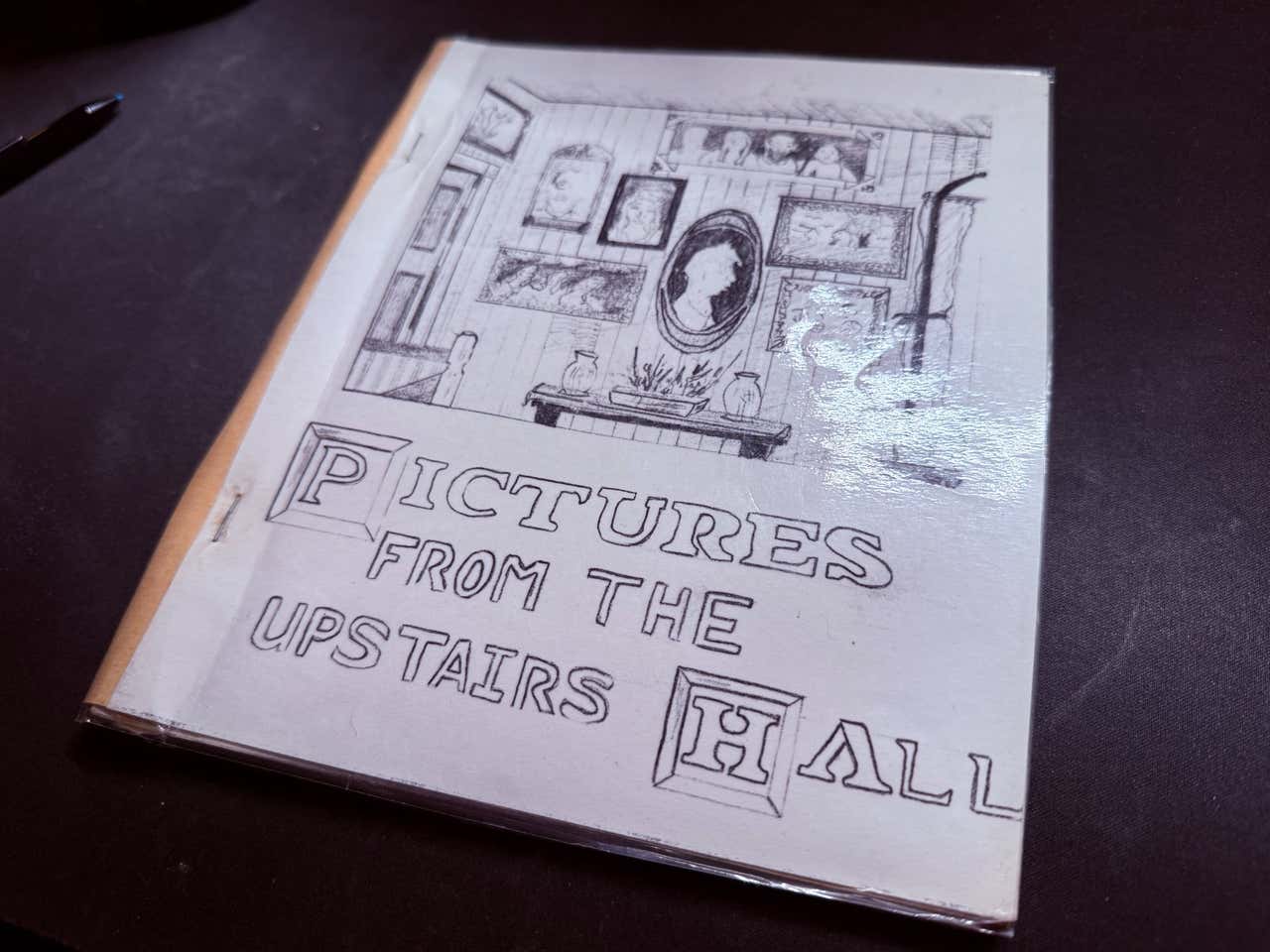
My dad wrote a book of short stories in the 80s, clacking them out on his typewriter. He taught me that the secret ingredient to a great story is change. These days, standing in the wings waiting for my cue, I think about how right he was.
When I was a kid in the 80s my dad wrote a book of short stories. He would clack them out on his typewriter and then narrate them onto tapes. I loved listening to the sound of his voice. It was my first audiobook!
I remember one story called "Levi - the Itinerate." In the story Levi was the hired man on the farm. I loved reading it over and over. I never knew if it was real. Whenever I asked my dad if it was, he'd tell me I'd just paid him the greatest of compliments. Then he asked me WHY I thought it was real.

He told me the best stories don't just have things that HAPPEN. People will lose interest unless what's happening means something to the characters in the story. They have to feel the effects of the story for it to matter.
"There's a secret ingredient, Joel, to a great short story, and any story, really," he told me one day. We were out in the hay field, fixing the square baler, so it was quiet. He was teaching me how to reset the knotter that tied each bale up tight.
"It's change."
I just looked at him. I didn't have to say anything. I was ten; he knew I had no idea what he meant.
"Think about the main character of the story," he went on. "This story is happening to them for the very first time, even though you may have read it over and over again." The fact that I had listened to his tape on repeat wasn't lost on him. "Everything that happens in that story, little by little, adds up, until right at the end, just when you're not sure what to make of it, the writer hits you with it."
"With what?"
"The ending. Sometimes more than that. Sometimes a little past the ending, there's a part that tells you what the writer was getting at all along."
He put his knife back in its sheath on his belt, where it always was, and wound the spring down on the old Massey-Ferguson baler. Good as new, even though it was probably 60 years old and kind of rusty.
"It's at that point you know, things are different. These characters that you've followed along with, that you've experienced life with, they're different."
He tousled my hair. "And at that point, you're different, too."
These days I look for stories everywhere. Seeing life as a series of stories helps me keep the world in perspective. It helps me empathize with things that I can't understand right away.
With theatre, I think it helps explain the world and also escape from it. Seeing each scene as a chapter in a story and playing a character in it who's experiencing it for that first time is a challenge for any actor, I would expect. For me, finding the consistent newness in the way a scene plays out brings me joy.
When I'm standing in the wings, waiting for my cue, I always think to myself how my character is evolving in what I'm about to do.
It never ceases to amaze me how right my dad was: no matter how many times I read the story, I'm different at the end, every time.
Mamma Mia is presented by the Northumberland Players at the Capitol Theatre in Port Hope, Feb 20-Mar 1. Get tickets here.
PS: if tickets appear scarce, keep checking back.