What Does Your Team Need from You?
Leadership isn't about what you can get from your team. It's about asking a different question entirely, one I learned from high school coaches and a theatre director who changed how I see the whole thing.
I think about leadership a lot. It occupies my mind in many situations, certainly at work. We manage our employees, we mentor, we teach, we train. Much of what I understand about good leadership I learned from school. I was lucky not only to have good teachers, but ones who also gave of their time to coach us, especially in high school.
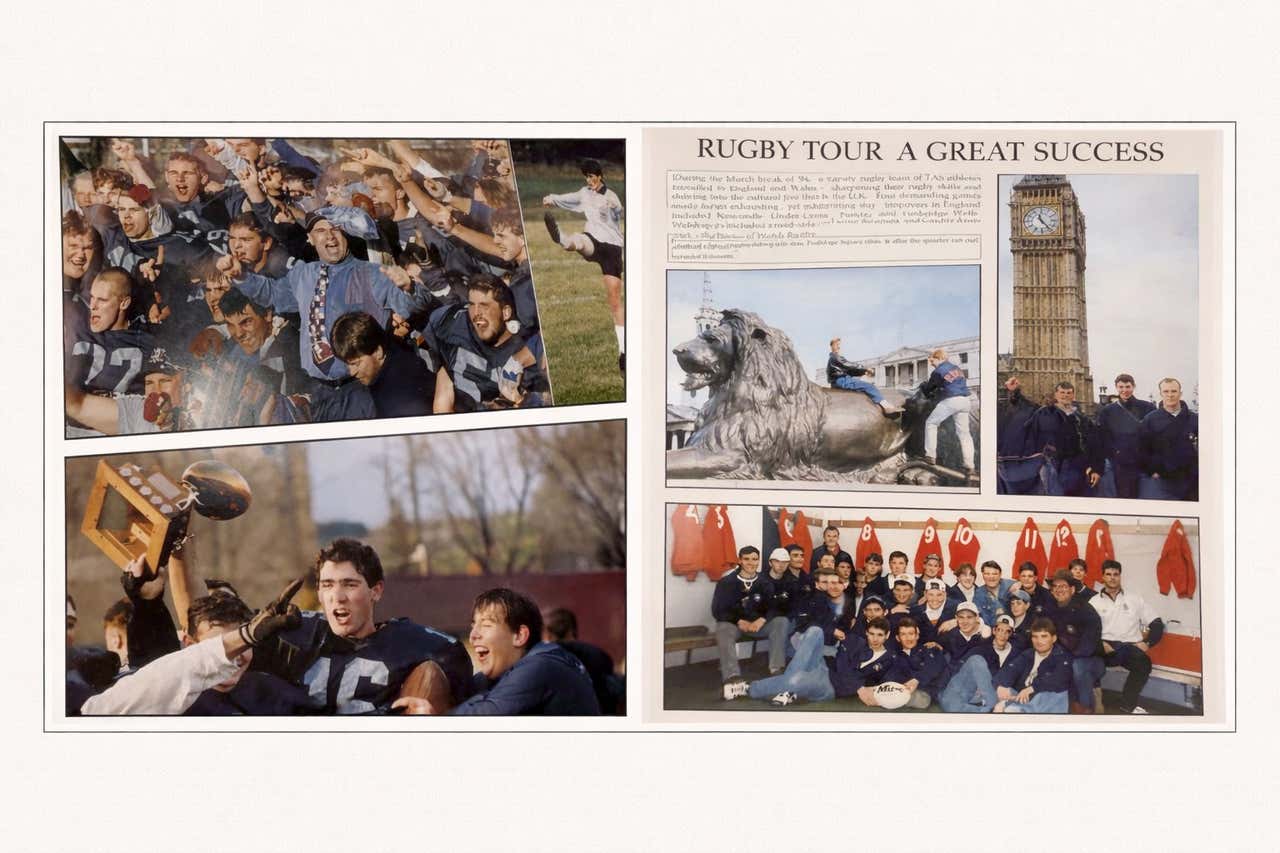
For me it was first rugby (a barbaric sport played by gentlemen, as it was described to me by either Craig Harris, John McGee, or Don Quarrie, I can't remember which). These men were all English teachers at Thomas A Stewart in Peterborough in the 90s. It's no surprise why I decided to do an English degree. I wanted to be these guys.
The thing about rugby that appealed to me was that I was encouraged to channel my capacity for violence (which as the youngest of 4 farm kids, was keenly honed) into the skills and onfield communication needed for teamwork. All of a sudden, my ability to run fast and tackle (or evade tackles) was combined with my natural inclination to shout play calls and other tactics in realtime during the extended play on the pitch. I was a natural, as were many of my new friends. We excelled, and our teacher-coaches became our role models. They led us in learning how to be men in our era.
Along with rugby, I also played football, which required a similar but somehow unique set of principles. Somehow, I became the starting quarterback in the 11th grade for our senior boys team. The TASS Griffins hadn't won a game since the 70s. We won our first that year, and in my grade 13 year we won the regional championship.
I remember my friend Gabe writing me a note not long after. This is remarkable not just because of a written letter between male friends, but because of how poignant his message to me was. You see, Gabe was actually a good football player. He was the leading tackler on our defence, a linebacker. Once he got to U of T he excelled, eventually playing for the Argos and winning a Grey Cup.
Ironically, Gabe and I both tried out for quarterback back in the beginning. He was actually much better than I, but Coach Harris (same guy as above who also coached rugby) decided that Gabe was such a good defender that it would be a shame to waste his time at backup QB. It was true. I think he led the team in tackles every year.
Double irony, though: in the first game of the season our starting QB hurt his pinky finger or something and I was thrust into action, having no real idea what the hell I was doing. There was no YouTube to learn from or internet to search "how to play quarterback." I learned from an old library book and threw a ball at an old tire.
So what was in the letter that Gabe wrote to me? And how the hell did we start winning?
I don't remember everything he said, but Gabe put me straight on who the better player was (him), but not from a place of ego. It was just the truth, and Gabe was always confident like that. He told me he was glad I was QB since, while he was the better player, I was more fit to be a leader.
Don't ask me how an 18-year-old kid can spot something like that in one of his peers, but he was right. My natural tendency was to find out what everyone on my team needed and to help them get there. I knew everybody's job on every play. In the huddle, I would tell anyone what they needed to hear to do their best on that particular play. I'd quote Top Gun and other movies to fire everyone up when we were losing. Even if we were down on the scoreboard, and our coaches were screaming at us, I'd stay calm and tell everyone it's ok. We were gonna find a way to win.
Fast forward many many years, and you might think I've got it all figured out. I've been a natural leader since I was a kid. People tend to look to me for that, I don't know why.
The thing is, leadership isn't as simple in life as it is on the football field. What I learned there certainly helped me, but I needed to look at what my coaches were doing, and later I learned from (ironically again) a woman named Bea Quarrie, who directed me as an actor in a play, to truly understand one of the most important tenets of true leadership.
When people look to you as a leader, you can either ask yourself "What can I get from these people today?" Which I think is the most common, easiest place to go. Often a leader is accountable to the outcome of a particular group or team, and it seems obvious to ask those on your team to go ahead and do that. One can certainly be encouraging. Let's cheer them on. How much can you do for me? Let's go!
Turns out that's a dick move. Nobody follows a leader who does that, at least not for long.
There's only one way to truly lead, and it has absolutely nothing to do with winning, or achievements, or even competition of any kind, even though great leaders tend to lead teams that do those things. No. True leadership is about the process, day to day, of what is needed from the leader for their team in that moment.
In other words, a leader must ask: "What does my team need from me, right now, in order to be successful?"
I learned this from my high school coaches and from a theatre director. I watched how they adjusted their style day to day to suit whatever the situation needed. Trust me, doing this for teenage boys, and for amateur actors is no mean feat. It took me a while to understand what they were doing, but once you see it, you can't unsee it.
That is how true leaders serve their teams, and it mostly happens not from the front, but from the rear. The really good leaders set their teams up for success and let them perform with the least amount of support possible. They only provide what's needed, and they trust in their team's ability to run with it. Their teams get stronger and more confident in their ability to do what's needed. Even if the struggle initially, eventually they will get better, and with time, they will become exceptional.
That's the question I try to ask myself now, whether I'm managing a project, mentoring someone, or working with a group. Not what can I get, but what do they need. It changes everything.