Nothing to Hide Behind: Directing Streetcar
A staged reading strips A Streetcar Named Desire down to its bones. No set, no costumes, no songs. Just the actors and Tennessee Williams' words. So I borrowed a trick from Williams and interviewed myself about directing it.
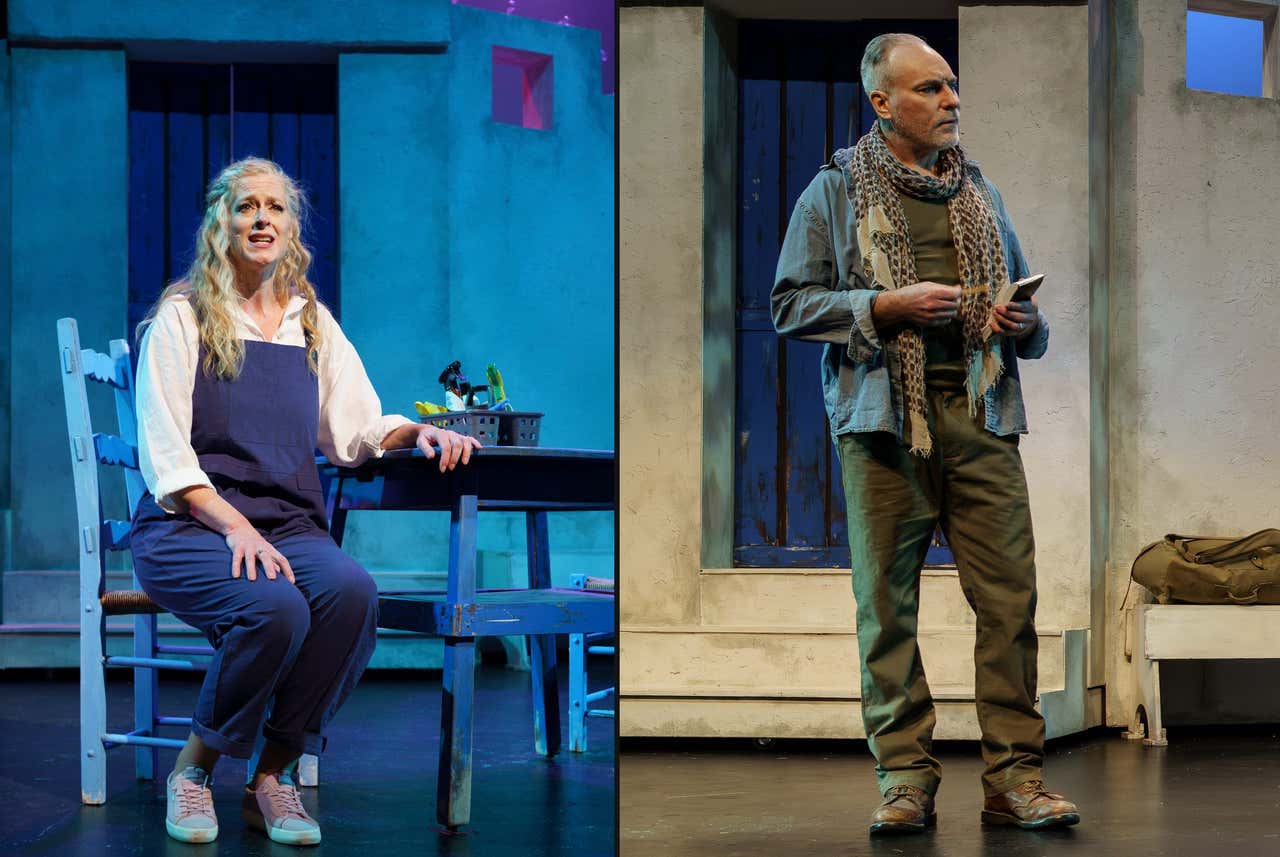
A few months ago, many of you watched Lisa Heitzner light up the stage as Donna in Mamma Mia, and laughed along with Craig Martin as one of the three possible dads. On October 16th, those same actors take on two of the most demanding roles in the history of the theatre: Blanche DuBois and Stanley Kowalski. They're joined by Gloria Digby as Stella, Jonathan Crilly as Mitch, and Ian Eddy as Steve and the Young Collector. Rounding out the cast are April Corning as Eunice, Ernie Anderson as the Nurse (and other roles), and Doug Knight as the Doctor.
You know the name A Streetcar Named Desire. But a staged reading strips it down to its bones: no set, no costumes, no songs, nothing to hide behind. Just the actors and Tennessee Williams' words. It's a rare chance to watch performers you already know take on something enormous, and to see a side of them you haven't seen before.
In the back of my copy of the play there's a short piece called "The World I Live In," where Tennessee Williams interviews himself (I mentioned it in my last post). Nobody was exactly lining up to interview me about directing this one, so I figured I'd steal his trick. If it's good enough for Tennessee...
Q: Why this play, and why a staged reading rather than a full production?
A: A staged reading allows us to experiment with plays that are riskier, bigger, or less well known than others. It would normally be a tough call to ask the board of directors to stage a production like Streetcar, but if we see a ton of interest for the reading...
Q: What makes Streetcar one of the hardest plays to pull off, even for seasoned actors?
A: The acclaim from the movie with Marlon Brando and Vivien Leigh, I think, makes it tough. How do actors avoid comparison with such an iconic portrayal of these characters?
It's also a script that employs language in a way that's unique even now, many decades later, but is still somehow applicable to us.
Q: What have you seen happen in rehearsal that audiences won't get to see, but should know about?
A: I love the process of theatre, even in preparation for a reading. As a director, I get to experience actors finding their way through their interpretation of the characters, and then expand that to the connections between each other. That connection is probably the thing that I enjoy the most, when it really starts to "gel".
Q: What do you want someone who's "seen the movie" to understand before they walk in?
A: We might be tempted to take great performances for granted, even to imagine ourselves yelling "Stella!" at the top of our voices, but that is only one of the key moments in this play. There's a range and depth to these characters and this story that belies description. You have to BE there!
Q: What's surprised you most directing this particular group of actors?
A: These are "Mount Everest" types of roles: iconic, but also so far removed from our everyday life. Watching these actors shed their skins and pull on new ones that are so unlike themselves, yet with aspects of themselves... it's very cool. Some of the scenes make it difficult to interpret the intentions of the characters, and when an actor nails the scene, it's pretty inspiring.
Q: Several of your cast just came off Mamma Mia. What's it been like watching them take on something this different?
A: Theatre at its best is about building community. I met most of these folks during that show, and that experience led pretty naturally into this one. It's amazing how a few short conversations backstage, between scenes or before a performance, can spark an idea and connection between actors. The idea for doing Streetcar came to me from a question someone asked me backstage, and while I never thought we'd get the opportunity to bring it to the stage, somehow, through our Producer, Val Russell (who directed Mamma Mia), that opportunity presented itself!

Ian Eddy as Pepper in Mamma Mia. He reads Steve and the Young Collector.
Q: Last one. Should people come?
A: I'm interviewing myself here, so you already know what I'm going to say. One night only: Friday, October 16 at 7:30pm at the Firehall Theatre, 213 Second St. in Cobourg. Tickets are $15 (and there are refreshments).
The Firehall is a small house, so don't leave it to the last minute. And remember what I said about the board... if you'd like to see Streetcar fully staged someday, showing up for the reading is the best way to make the case.