The Choice Before Us: Why Star Trek Still Matters
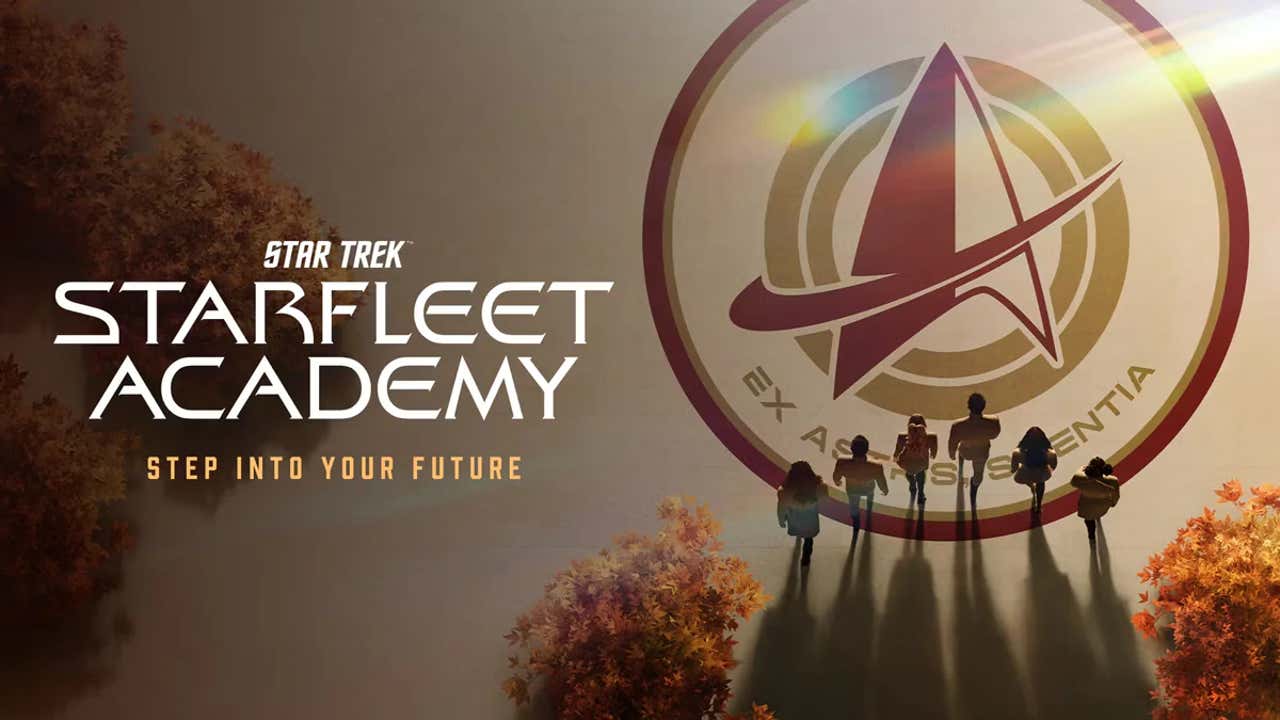
Star Trek: Starfleet Academy premieres today, and we're living in a new golden age of Trek. But beyond the entertainment, Gene Roddenberry's vision offers us something we desperately need right now: a roadmap for how technology can make us more human, not less.
I just watched the first episode of Star Trek: Starfleet Academy and I'm genuinely excited. Paul Giamatti as the villain Nus Braka? Amazing. The man brings such gravitas to everything he does, and seeing him fully commit to this half-Klingon, half-Tellarite space pirate is a joy. Holly Hunter as Captain Ake commanding the USS Athena, Robert Picardo returning as the Doctor, Stephen Colbert voicing the Digital Dean of Students—this premiere felt like a love letter to what Star Trek can be.
There new faces are good too, though less memorable as yet. Who knows if we'll come to love them as we do Data, Seven of Nine, Jordi, Riker, and all the rest.

A New Golden Age
We're at an interesting moment. Strange New Worlds just wrapped its third season and is heading into season four (with a fifth and final season already in production). I firmly believe it's the best Star Trek series since TNG. Anson Mount is fantastic as Pike - I loved his work in Hell on Wheels, and this new series, while seemingly oceans apart from that, fits his capabilities to a tee.
Starfleet Academy is set in the 32nd century, 125 years after The Burn, connecting to the Discovery timeline while standing on its own. This is the 60th anniversary year of Star Trek, and the franchise feels as vital as it did when Deep Space Nine and Voyager were running alongside The Next Generation.
I do have to admit that I never could get into DS9 like I did TNG. I think it's because Picard manages to touch a cord with me as a Shakespearan actor that he is. I grew up listening to records of Macbeth and Hamlet on vinyl and I think hearing Patrick Stewart's voice just does something different. It's hard to explain, if you don't get it already.

Here's what's interesting right now: it's not just that we have multiple Trek shows. It's that the best of them (Strange New Worlds especially) have rediscovered what made Trek essential in the first place as an accessible sci-fi show.
Gene Roddenberry's Vision
Great science fiction has always been about holding up a mirror. It uses the future to ask questions about who we are now and who we might become. I believe Gene Roddenberry's specific genius (or maybe luck) was creating a future worth wanting.
Star Trek isn't really utopian - that would be boring. The premise of the Roddenberry future is that he believed we can grow. The crew of the Enterprise aren't post-human or genetically enhanced superbeings (we saw how that turned out with Khan - epic though it was). They're recognizable to us: flawed; emotional; sometimes petty, but operating within a society that encourages people to better themselves - and not financially, but as beings.

Look at Captain Pike's dinners in Strange New Worlds. He literally cooks for his crew! In a ship with replicators that can produce any meal instantly, he chooses to make food by hand and share it around a table. That's a bold statement about what technology is for.
The Choice: Borg or Picard
Star Trek has always presented us with two paths for how technology and humanity intersect. The Borg represent one extreme: efficiency above all, individuality erased, organic life merged with bionic technology until the distinction disappears. "Resistance is futile." Your biological and technological distinctiveness will be added to their own.

But then there's Picard's (Roddenberry's?) vision. Technology as a tool that frees us to pursue what makes us human: art, philosophy, exploration, connection. Even the holodeck (please invent this soon!) doesn't replace real experience—it augments it. And the transporter! It doesn't eliminate the journey so much as it enables new ones - although I still feel like I'd want to pilot the shuttle down to the surface, thanks very much. Even the notion of medicine and doctors and "do no harm" still exists; technology exists to extend life so we have more time to live.

Seven of Nine's entire arc on Voyager was about this choice. She was Borg. She had efficiency, she had the collective hive mind. Janeway spent years helping her rediscover what she'd lost—not just her individuality, but her capacity for doubt, growth, and genuine connection with others.
The Trial of Humanity
In the very first and very last episodes of The Next Generation, Q puts humanity on trial. He challenges Picard to prove that humans are more than a "dangerous, savage child race." Picard's defense isn't that we've achieved perfection. It's that we're capable of growth. Also, if you don't enjoy John de Lancie as Q, what happened to you?

That's the essential optimism of Star Trek. Not that we'll become perfect, but that we'll keep trying. Not that technology will solve our problems, but that it can free us to work on the problems that matter... the ones inside ourselves.
Why This Matters Now
We're living through our own moment of technological transformation. AI is here. It's getting more capable every month. And we face a real choice about what kind of future we're building.
We can go the Borg route: maximum efficiency, human judgment replaced by algorithmic optimization, creativity outsourced to machines, our distinctiveness dissolved into a technological collective that thinks faster but perhaps not deeper.
Or we can follow Roddenberry's vision: AI as a tool that handles the routine so we can focus on the meaningful. Technology that augments human creativity rather than replacing it. Systems designed to free us for connection, exploration, and growth.

The final scene of The Next Generation wasn't a battle or a scientific discovery. It was Picard finally joining the senior staff's poker game. After seven years, he sat down at the table with his crew, his family, and dealt himself in.
I believe that's the future worth building. Not one where technology makes human connection obsolete, but one where it gives us more time and space to be REAL with each other.
Star Trek: Starfleet Academy premieres today on Paramount+. Strange New Worlds returns for season four later this year. The voyage continues. And sixty years after Gene Roddenberry first imagined a future worth wanting, the choice is still ours to make.