Choosing to Drive
A former college athlete's honest reckoning with middle-aged health — from powering through injuries to finally sitting down with a cardiologist and asking the right questions.
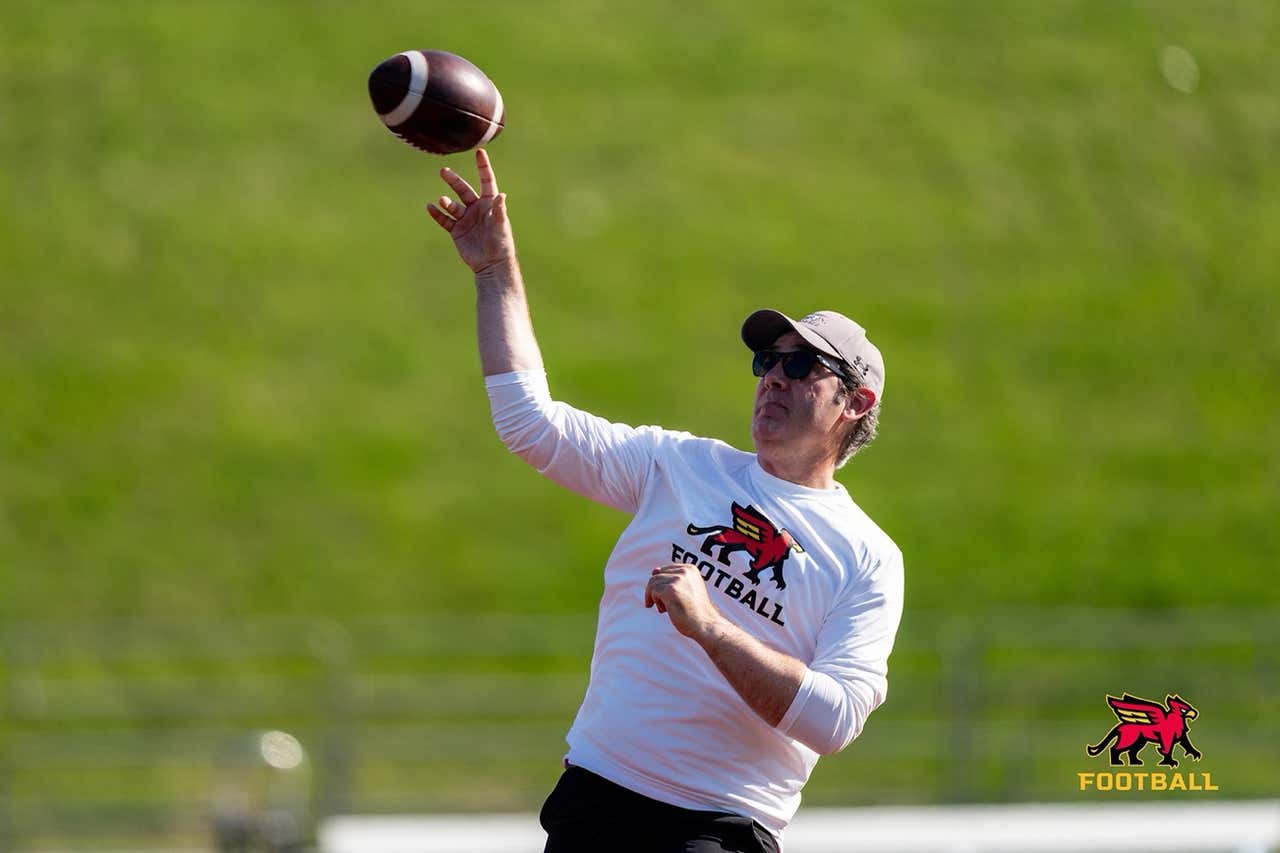
When I graduated from the University of Guelph back in 1999, I was coming off four seasons of football where the injuries kept adding up. Some of them significant, like my lower back. Others just the regular stuff: sore knees, hips, wrists, whatever. My coach used to look at us and say "we're a little nicked up." It made us feel better, but it also unlocked something — this attitude that we could will ourselves through just about anything.
That's an amazing mental framework for getting through a football season. For overcoming psychological obstacles. For health? Not a great long-term strategy.
Like a lot of former athletes, I gained quite a bit of weight in my late twenties. Not crazy weight — and on a six-foot-four frame you can hide a lot of pounds — but the habits I'd picked up trying to gain weight while playing football were hard to shake. Stopping yourself from losing weight when you're training hard is one thing. Carrying that same approach into a desk job is another.
I've always enjoyed being outside. Hiking, skiing, that kind of stuff. But it was never quite enough to really get me back into shape.
In my thirties, I started doing theatre. Sometimes I'd lose fifteen pounds or so during the run of a musical. In 2016, for Young Frankenstein, I played Frederick — and it was a very physical role. The director had me fighting with the monster, dancing (including a huge tap number), and of course doing a ton of singing. Challenging physically, but an amazing way to get fit. I remember thinking of it as "good tired." Unlike being exhausted at the end of a long day at work, I'd feel wiped out but also recharged. Laying my head on the pillow feeling like something had actually happened.

Then along came COVID and messed with everything.
Days spent eating way too much, doing way too little, stressed to the max, not knowing what tomorrow would hold. If any of you reading this didn't gain weight during that stretch, I want to know your secret. I have some ideas for what I'd do differently if we had another lockdown situation. In 2020 though? I sure packed on the pounds again.
Apparently men age in bursts. For me, I think it was age 46. All of a sudden I had high cholesterol and my risk of "cardiovascular event" was not insignificant. I tried changing my diet — more fibre! — and even started intermittent fasting (which I don't hate now that I've figured out how to make it work). My regular doctor was concerned but didn't push too hard. A couple tests later though, the cholesterol levels did not come down. He did a bunch of other tests, then referred me to a cardiologist.
I remember thinking I didn't deserve to be taking up time with this important doctor. My mom had major surgery several years earlier and even she had to wait forever for her cardiologist appointments. Surely my little cholesterol situation wasn't anywhere near that level.
I ended up on the minimum dose of a statin. My levels came down a bit. Doubled the dose, a lot better.
Fast forward to now. I'm waiting in between scans for a stress test on my heart. A couple of weeks ago I had another conversation with my cardiologist. I'd lost maybe twenty-five pounds between doing the production of Mamma Mia and training for my upcoming Scotland hiking trip. I also turned 50. The combination of those things — or maybe this is a midlife crisis, who knows — made me decide to really talk to my doctor. I had him for fifteen minutes. Let's figure this stuff out.
Here are a few of the phrases I used:
- "Doc, what do I have to do to be as healthy as I can be?"
- "You mentioned doubling my statin again to get my cholesterol below 2. Will that lower my risk?"
- "My cholesterol was high for a while. What can I do to reverse that?"
I won't share all of his response, but I can tell you his attitude changed when I started taking this stuff seriously and stopped resisting his efforts. Honestly, I think he was expecting me to resist.
So here I am doing a stress test to get a better understanding of what's going on with my arteries. So far so good. I'm also doing blood work, Doppler tests, and some other things I don't fully understand yet. These might be routine to a lot of people, but to me they feel significant. They signify that I'm taking control of my health in a way I haven't before.


Life is a journey that, at certain times, you can decide whether you're a passenger or whether you're in the driver's seat. I'm choosing to drive while I still have the ability to do so.
I'll keep you posted on how things go.